If you run a small business in India, chances are your customers are already scrolling through Instagram, WhatsApp, or YouTube right now. That’s exactly why social media marketing for small business India has become less of an option and more of a necessity. With over 900 million internet users in the country and social platforms growing faster than ever, small businesses that show up online consistently are the ones winning customer trust, loyalty, and sales.
The good news? You don’t need a massive budget or a corporate marketing team to succeed. What you need is a clear, practical strategy tailored to how Indian consumers actually behave online. In this guide, we’ll walk through everything you need to know to build a strong presence, connect with your audience, and turn followers into paying customers.
Why Social Media Matters for Small Businesses in India
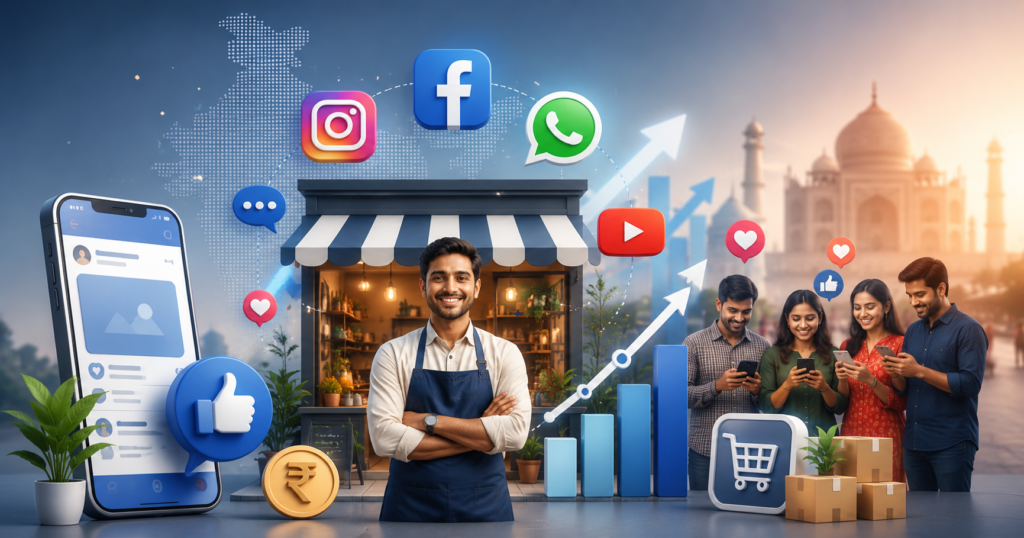
India’s digital landscape has changed dramatically over the past few years. Affordable data, smartphone penetration, and platforms like Instagram, Facebook, and WhatsApp Business have made it possible for even a small tailoring shop or home bakery to reach thousands of local customers without spending a fortune.
Here’s why social media deserves a place in your marketing plan:
- Cost-effective reach: Unlike traditional advertising, social media lets you reach targeted audiences at a fraction of the cost.
- Direct customer interaction: You can talk to your customers in real time, answer queries, and build genuine relationships.
- Local visibility: Location-based targeting helps you attract nearby customers who are ready to buy.
- Brand credibility: An active, well-maintained profile builds trust faster than a business with no online presence at all.
For small businesses competing against bigger players, this level of accessibility is a genuine advantage — if used correctly.
Building a Small Business Social Media Strategy in India
A strong small business social media strategy India starts with clarity, not complexity. Before posting anything, take time to define your goals and understand your audience.
1. Know Your Audience
Every region and community in India has different preferences. A business in Mumbai targeting young professionals will need a different tone and platform mix than a business in a smaller town targeting families. Research your audience’s age group, language preference, and the platforms they use most.
2. Choose the Right Platforms
You don’t need to be everywhere. Focus on platforms where your customers actually spend time:
- Instagram – Ideal for visually appealing products, fashion, food, and lifestyle brands.
- Facebook – Still strong for local businesses, community engagement, and older demographics.
- WhatsApp Business – Essential for direct communication, order updates, and customer service.
- YouTube – Great for tutorials, product demos, and building long-term authority.
3. Set Realistic, Measurable Goals
Whether it’s increasing footfall, generating leads, or boosting online orders, having a clear goal helps you measure whether your efforts are actually working.
Practical Social Media Tips India Businesses Can Use Today
Strategy is important, but execution is where most small businesses struggle. Here are some actionable social media tips India entrepreneurs can start applying immediately.
Post Consistently, Not Excessively
Consistency builds trust with both your audience and the platform algorithms. Three well-planned posts a week will outperform daily posts that feel rushed or repetitive.
Use Regional Language When It Makes Sense
India is linguistically diverse, and content in Hindi, Tamil, Bengali, or other regional languages often performs better for local audiences than English-only content. Mixing English with regional phrases (Hinglish, for example) can also feel more relatable.
Leverage Festivals and Local Events
Diwali, Eid, Holi, Durga Puja, and regional festivals present natural opportunities for themed promotions, offers, and culturally relevant content that resonates deeply with Indian audiences.
Show the Human Side of Your Business
Behind-the-scenes videos, customer testimonials, and stories about your team humanize your brand. People trust businesses that feel real, not just promotional.
Use Video Content Strategically
Short-form videos, especially Instagram Reels, continue to drive high engagement. A simple, well-lit video showing your product or process can outperform polished but impersonal content.
Common Mistakes Small Businesses Should Avoid
Even with the best intentions, many small businesses make avoidable mistakes:
- Inconsistent posting that causes audiences to lose interest.
- Ignoring comments and messages, which damages trust and responsiveness.
- Overly promotional content without any value, storytelling, or engagement.
- Not tracking performance, making it impossible to know what’s working.
- Buying followers, which hurts credibility and engagement rates in the long run.
Avoiding these pitfalls alone can put you ahead of many competitors who overlook the basics.
Digital Marketing for Small Business India: Going Beyond Organic Posts
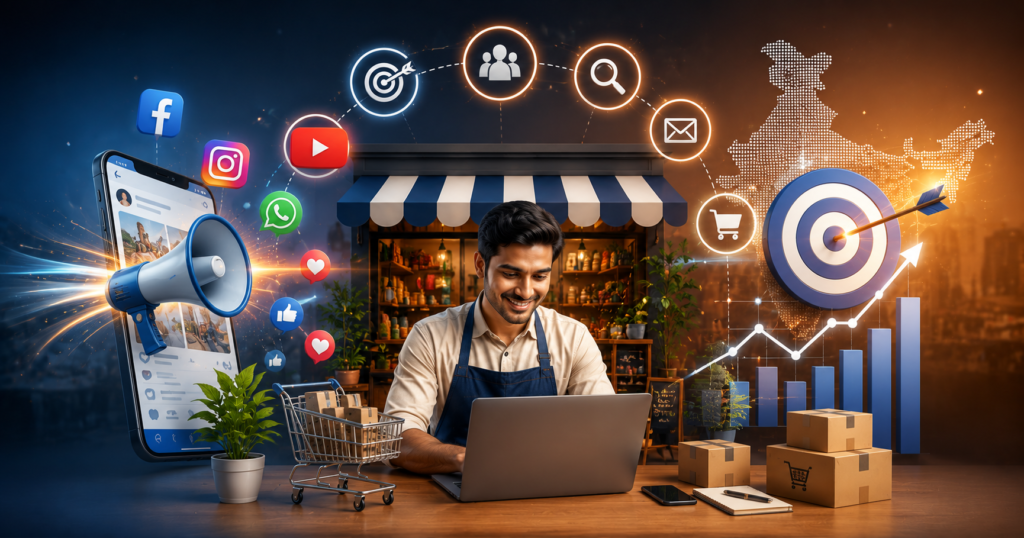
While organic content builds long-term relationships, combining it with paid efforts accelerates growth. This is where digital marketing for small business India becomes essential to a well-rounded approach.
Paid Social Media Advertising
Platforms like Meta Ads allow hyper-local targeting based on location, interests, and behavior — perfect for small businesses wanting to reach nearby, relevant customers without wasting budget on broad, unqualified audiences.
Influencer Collaborations
Micro-influencers with smaller but highly engaged local followings often deliver better ROI than large celebrities, especially for regional or niche businesses.
Analytics and Optimization
Tracking metrics like engagement rate, click-through rate, and conversions helps refine your strategy over time. What works in month one may need adjusting by month three as trends and audience behavior shift.
If managing all of this feels overwhelming alongside running your business, partnering with professional Social Media Marketing Services can help you build a consistent, results-driven presence without stretching your time or resources thin.
How to Measure Success on Social Media
Growth isn’t just about follower count. Focus on metrics that actually reflect business impact:
- Engagement rate – likes, comments, shares relative to your audience size.
- Website or store visits driven from social profiles.
- Lead or inquiry generation through direct messages or contact forms.
- Conversion rate from social media campaigns to actual sales.
Regularly reviewing these numbers helps you understand what content resonates and where to invest more effort.
Final Thoughts: Building Sustainable Growth Online
Success in social media marketing for small business India doesn’t happen overnight, and it doesn’t require a massive budget either. It requires consistency, authenticity, and a willingness to understand what your specific audience responds to. Start small, track your results, adjust your approach, and let your brand’s personality shine through every post.
Whether you’re a home-based business or a growing local brand, the businesses that treat social media as a genuine relationship-building tool — rather than just a promotional channel — are the ones that build lasting customer loyalty.
Frequently Asked Questions (FAQs)
Q1. Which social media platform is best for small businesses in India? It depends on your industry and audience. Instagram works well for visual and lifestyle brands, Facebook suits local community engagement, and WhatsApp Business is essential for direct customer communication.
Q2. How much budget do small businesses need for social media marketing in India? Many small businesses start with organic content at minimal cost and gradually add paid promotions, often starting with as little as ₹500–₹1000 per campaign, scaling based on results.
Q3. How often should a small business post on social media? Consistency matters more than frequency. Posting 3–4 times a week with quality, relevant content typically performs better than daily, low-effort posts.
Q4. Can social media marketing really increase sales for small businesses? Yes. When combined with clear calls-to-action, customer engagement, and occasional paid promotion, social media can directly drive inquiries, footfall, and online sales.
Q5. Is it necessary to hire a professional agency for social media marketing? Not always, but as your business grows, professional support can save time, improve strategy, and deliver better returns — especially if you lack the bandwidth to manage content, ads, and analytics consistently.
Q6. What type of content works best for Indian audiences on social media? Content that reflects local culture, festivals, regional language, and relatable storytelling tends to perform better than generic, one-size-fits-all posts.
Content brought to you by Marketing Keen