Most small business owners have heard both terms, and many assume they mean the same thing. They don’t. The debate over performance marketing vs digital marketing matters because it shapes where your limited budget goes and how quickly you see results. Digital marketing is the broad approach to building your brand online. Performance marketing is a focused, pay-for-results method within it.
In this guide, you will learn how each approach works, where they differ, and how to combine them into one practical plan. You will also see how social media and influencers fit in, and what to look for in a marketing partner.
What Is Digital Marketing?
Digital marketing covers every effort to promote your business through online channels. That includes your website, search engine optimization (SEO), email, content, social media, and online ads. The main goal is to help people find you, trust you, and remember you.+0
Think of it as building a shop that people want to visit. A good website, helpful blog posts, and an active social presence all make your business look credible. Many small businesses start with digital marketing services such as website design, local SEO, and content creation because these create a lasting foundation.
The trade-off is speed. Some digital marketing efforts, like SEO and content, take months to pay off. Results are also harder to tie to a single rupee spent, because a customer may see your Instagram post, read your blog, and then buy weeks later.
What Is Performance Marketing?
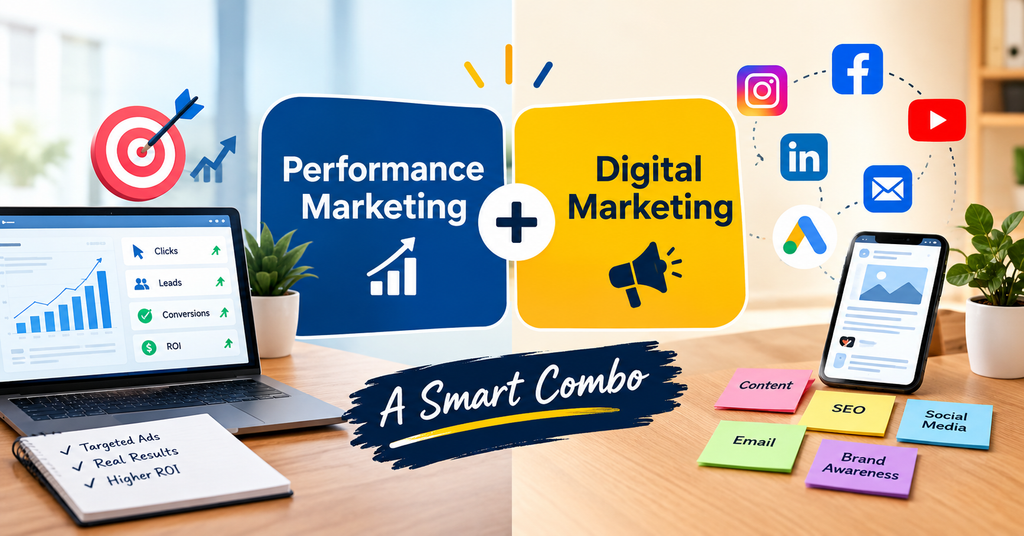
Performance marketing is a results-driven model where you pay only when a specific action happens. That action might be a click, a lead, a form submission, an app install, or a sale. Common formats include Google Search ads, Meta (Facebook and Instagram) ads, affiliate programs, and retargeting campaigns.
Its biggest strength is accountability. Every campaign has a clear cost per lead or cost per sale, so you can see what is working within days. If an ad performs poorly, you pause it. If it performs well, you put more budget behind it.
However, performance marketing has limits. Ads stop delivering the moment you stop paying, and rising ad costs can squeeze margins. It also works best when people already recognize your brand or when your offer is very clear.
Performance Marketing vs Digital Marketing: Key Differences
The simplest way to understand the two is by scope and purpose. Digital marketing is the whole toolkit. Performance marketing is one part of that toolkit, tuned for measurable, short-term outcomes. The table below compares them side by side.
| Factor | Digital Marketing | Performance Marketing |
|---|---|---|
| Main goal | Brand awareness, trust, long-term growth | Leads, sales, and other trackable actions |
| Payment model | Often fixed fees or time-based spend | Pay per click, lead, or sale |
| Speed of results | Gradual (weeks to months) | Fast (days to weeks) |
| Measurement | Broader metrics such as traffic, reach, engagement | Precise metrics such as CPA, ROAS, conversion rate |
| Typical channels | SEO, content, email, organic social | Paid search, paid social, affiliates, retargeting |
| Best for | Building a lasting audience | Scaling proven offers quickly |
| Main risk | Slow, hard-to-attribute returns | Costs rise; results stop when spending stops |
As you can see, these two are not rivals. One creates demand and trust, and the other captures that demand and converts it. Treating them as an either-or choice is the most common mistake small businesses make.
Why Small Businesses Need Both
A small business rarely has the budget to waste, so both approaches must earn their place. Used together, they cover each other’s weak spots. Here is how each side contributes.
Digital Marketing Builds Trust and Memory
When a stranger sees your ad, they often check your website and social profiles before buying. If those look outdated or empty, the ad money is wasted. Strong content, reviews, and consistent posting make paid traffic far more likely to convert.
Over time, this foundation also lowers your costs. People who already know your brand click more often and buy more readily, which improves your ad results.
Performance Marketing Proves What Works
Paid campaigns act like a fast testing lab. You can try three headlines, two audiences, and two offers within a week and see which combination brings the cheapest customers. Those insights are valuable beyond ads.
For example, if one message wins in paid ads, you can reuse it on your website, emails, and organic posts. In my experience working with small brands, this feedback loop is where the two approaches truly pay off together.
How Social Media Marketing Connects Both Worlds
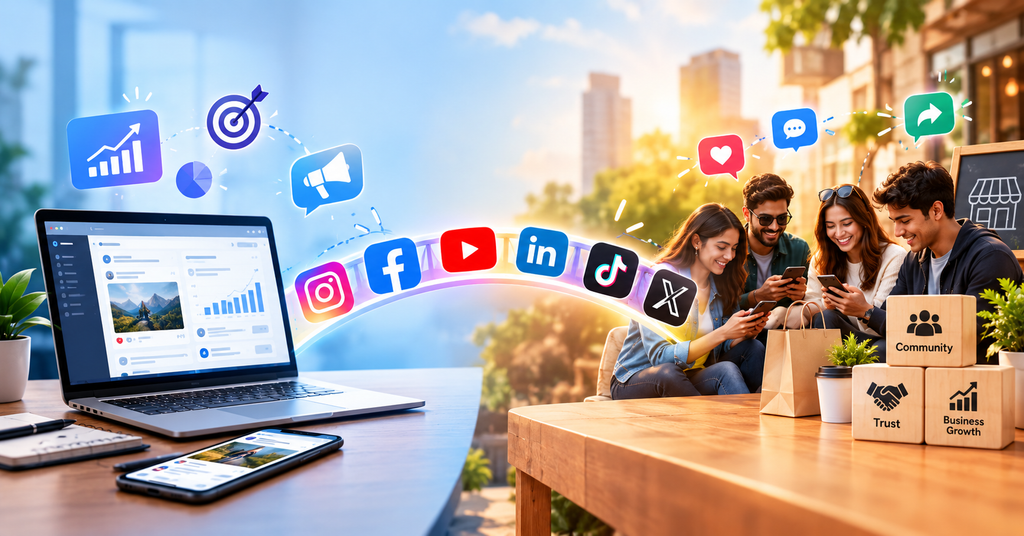
Social media marketing is the natural meeting point. On the organic side, it builds community, showcases your products, and answers customer questions. On the paid side, platforms like Instagram and Facebook offer precise targeting, from location and age to interests and behavior.
A local retailer, for instance, can post daily product reels to stay visible, then run a lead-generation ad to people within a few kilometres of the store. The organic content warms up the audience, and the paid ad gives them a clear next step. Without the organic posts, the ad feels like a cold pitch. Without the ad, good content may never reach enough people.
Be careful to track both sides properly. Organic posts should be judged on engagement and profile visits, while paid campaigns should be judged on cost per lead or sale. Mixing these metrics leads to poor decisions.
Where Influencer Marketing Fits In
Influencer marketing sits between brand building and performance. A creator’s recommendation builds trust quickly, which is hard to earn through your own posts alone. At the same time, you can add performance elements such as unique discount codes, tracked links, or affiliate commissions.
Small businesses often do better with micro-influencers, meaning creators with smaller but more engaged audiences. They usually cost less, and their followers tend to be local or niche, which suits a limited budget. A cafe or boutique in Delhi, for example, may see stronger results from a few local creators than from one expensive celebrity post.
You can also reuse influencer content in your paid ads, since real customer-style videos often outperform polished studio creative. Just make sure you have written permission and follow advertising disclosure rules.
Building a Combined Strategy Step by Step
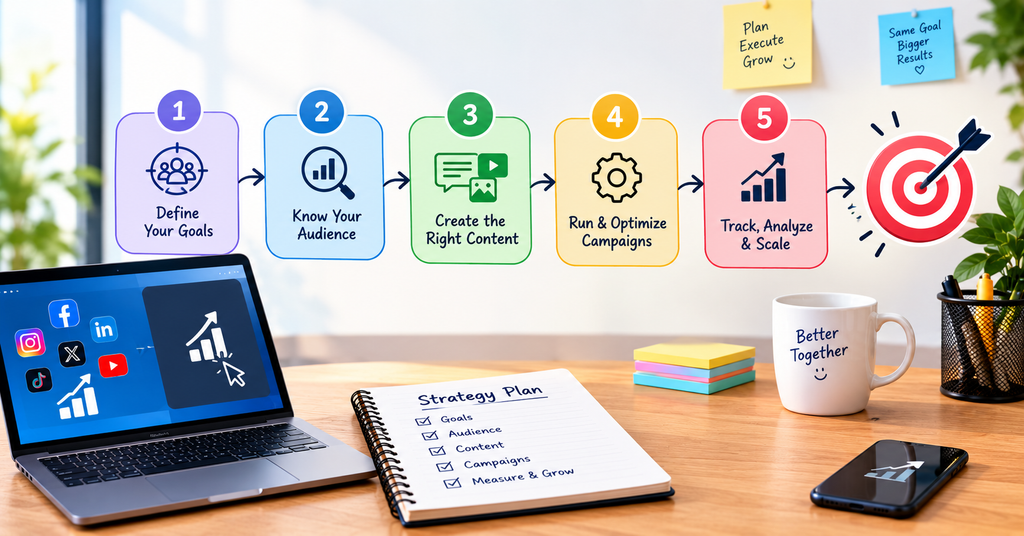
A combined plan does not need to be complicated. It needs clear goals, a sensible budget split, and regular review. Follow these three steps.
Step 1: Set One Clear Business Goal
Start with a goal such as “generate 100 qualified leads per month” or “increase online orders by 30%.” Then break it into stages: awareness, consideration, and conversion. Digital marketing usually supports the first two stages, while performance marketing pushes the third.
Step 2: Split Your Budget Wisely
There is no universal ratio, but a common starting point for a small business is to put more weight on proven, trackable campaigns while keeping a steady share for foundation work. For instance, you might begin with roughly 60% on performance channels and 40% on content, SEO, and organic social. Adjust as data comes in.
If your brand is new and unknown, shift more toward awareness first. If you already have loyal customers and a strong offer, lean further into performance. This split should be reviewed every quarter.
Step 3: Measure, Learn, and Reallocate
Track a small set of numbers: cost per lead, conversion rate, return on ad spend, and repeat purchases. Review them monthly and move budget toward what delivers results. Also watch assisted conversions in your analytics, because a blog post or social video may have started a sale that an ad finished.
Quick tips for cleaner tracking:
- Use unique UTM links for every campaign.
- Set up conversion tracking before spending on ads.
- Keep a simple spreadsheet of monthly results.
Choosing the Right Marketing Partner
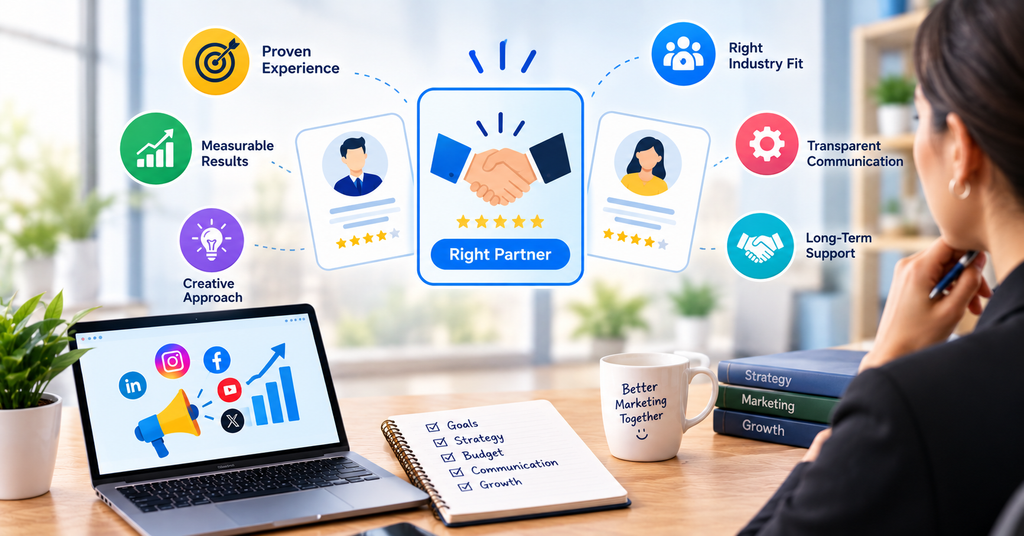
Many small owners lack the time to manage all of this alone. If you are searching for the best social media marketing agency in Delhi, look past flashy portfolios and ask about process. A trustworthy agency should explain how it measures results, share sample reports, and be honest about timelines.
Ask whether they can handle both brand-building and paid campaigns under one roof. Agencies that offer complete digital marketing services can keep your messaging consistent across SEO, social, ads, and influencer work. Also check that you keep ownership of your ad accounts and data, so you are never locked in.
Finally, be cautious of guarantees like “10x sales in 30 days.” Real marketing results depend on your product, pricing, and market, and a credible partner will say so.
Common Mistakes to Avoid
The first mistake is spending on ads before your website and social profiles are ready. Visitors who land on a slow or unclear page will leave, and you will pay for every wasted click. The second is judging campaigns too early. Ads need a short learning period, usually a week or two, before the data becomes reliable.
Another frequent error is ignoring existing customers. Email and WhatsApp follow-ups cost far less than winning new buyers, yet many businesses skip them. Lastly, avoid changing too many things at once. Test one variable at a time so you know what caused a change in results.
Conclusion
The real answer in the performance marketing vs digital marketing question is that you don’t have to choose. Digital marketing creates trust and long-term visibility, while performance marketing turns that attention into measurable results. Social media and influencer marketing connect the two, giving small businesses both reach and accountability.
Start small: set one clear goal, split your budget, and review the numbers every month. If you would like expert help building a plan tailored to your business, reach out to a qualified marketing team and ask for a free strategy consultation today.
Author By Marketing Keen