Influencer marketing has become one of the most powerful tools in a business owner’s playbook, but it has also become one of the easiest ways to waste a marketing budget. Many brands assume that bigger follower counts mean better results, only to discover that a single sponsored post from a celebrity influencer cost more than an entire quarter’s marketing spend. If you have ever wondered how to find influencers for your brand without overpaying, you are not alone, and the good news is that it is absolutely possible with the right approach.
This article breaks down practical, field-tested strategies for identifying the right influencers, negotiating fair rates, and building partnerships that actually move the needle for your business. You will learn where to search, how to evaluate influencers beyond follower count, and how to structure deals that protect your budget while still delivering strong results. Whether you run a small local business or a growing e-commerce brand, these lessons come from real experience in social media marketing and influencer marketing campaigns across multiple industries.
Why Overpaying for Influencers Happens So Often
Most businesses overpay for influencers because they chase vanity metrics instead of actual engagement and relevance. A social media account handle with a million followers looks impressive on paper, but if only two percent of those followers actually engage with content, the reach is far less valuable than it appears. Brands often skip the research phase entirely, reaching out to the first influencer that pops up in a hashtag search, which puts them at a disadvantage before negotiations even begin.
Another common mistake is failing to set a clear budget and campaign goal before making contact. Without a defined scope, influencers (or the agencies representing them) set the terms of the conversation, and pricing tends to drift upward. Understanding this dynamic is the first step toward fixing it, because it shifts the power back to your brand rather than leaving pricing entirely in the influencer’s hands.
Start With Micro and Nano Influencers
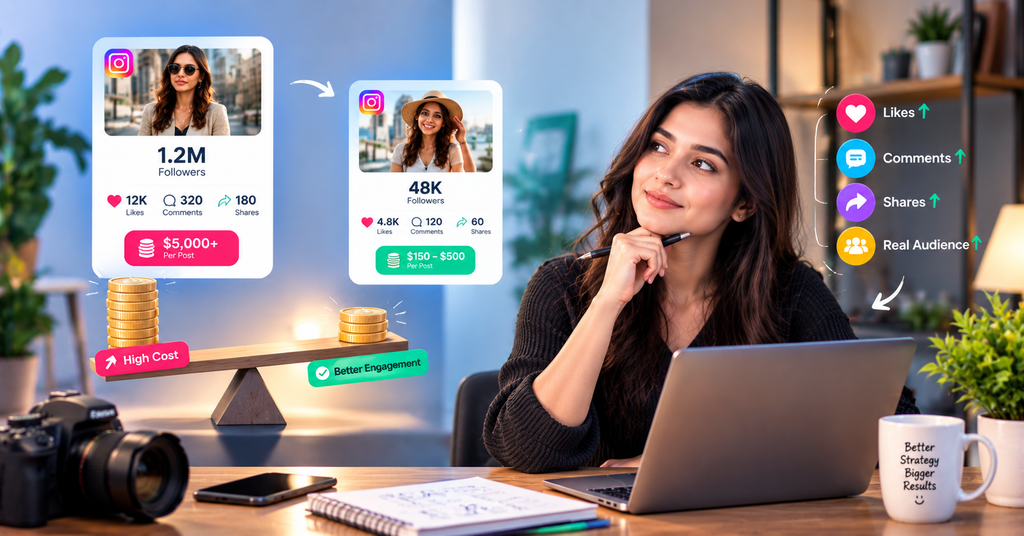
One of the most reliable ways to control costs is to focus on micro-influencers (typically 10,000 to 100,000 followers) and nano-influencers (under 10,000 followers) rather than celebrities or mega-influencers. These smaller creators often have tighter-knit, more engaged communities, and their audiences tend to trust their recommendations more because the relationship feels personal rather than transactional. Industry data has consistently shown that engagement rates fall as follower counts rise, which means a nano-influencer with 5,000 loyal followers can sometimes outperform a mega-influencer with content creation quality but a disengaged audience.
Micro and nano influencers are also far more open to flexible compensation, including product exchanges, affiliate commissions, or smaller flat fees, especially if they are early in their content creation journey. This makes them ideal partners for businesses that want to grow without the financial risk of a large upfront contract. Many successful long-term influencer marketing programs are built almost entirely around a network of smaller creators rather than one or two expensive names.
How Follower Size Affects Cost and Engagement
| Influencer Tier | Follower Range | Typical Engagement Rate | Typical Cost Range (Per Post) | Best For |
|---|---|---|---|---|
| Nano | Under 10,000 | 5% – 8% | Free product to ₹1000 | Local businesses, niche products |
| Micro | 10,000 – 100,000 | 2% – 5% | ₹1000 to ₹10,000 | Growing brands, targeted campaigns |
| Mid-tier | 100,000 – 500,000 | 1.5% – 3% | ₹10,000 to ₹20,000 | Regional or national awareness |
| Macro | 500,000 – 1 million | 1% – 2% | ₹20,000 to ₹50,000 | Large-scale brand campaigns |
| Celebrity/Mega | 1 million+ | Under 1% | ₹50,000+ | Mass awareness, brand prestige |
As the table shows, the relationship between follower count and engagement is often inverse. This is exactly why smart budget allocation toward smaller creators frequently delivers a stronger return, especially for businesses that are still building brand recognition.
Use Free and Low-Cost Tools to Find the Right Fit
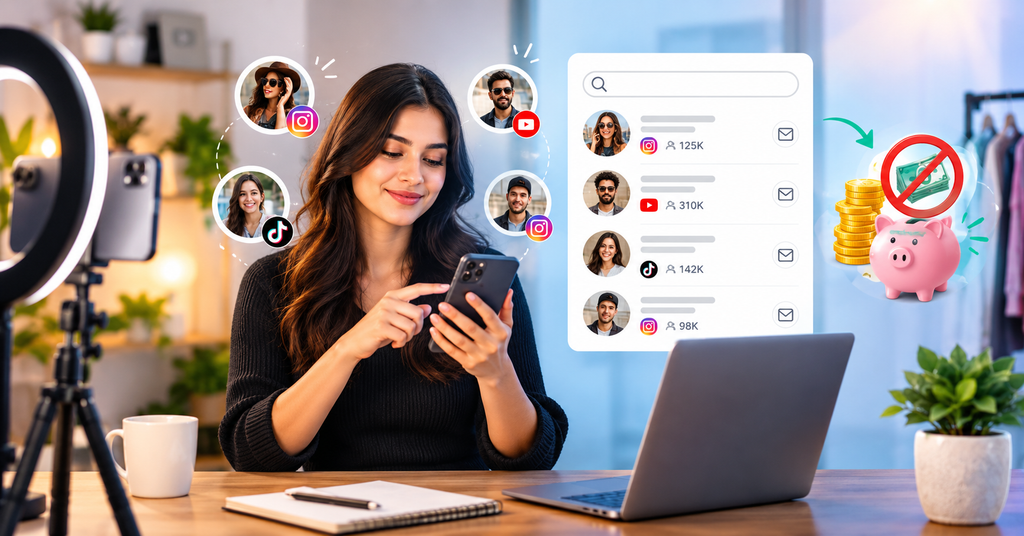
You do not need an expensive influencer marketing platform to find quality partners. Start by searching relevant hashtags and keywords directly on Instagram, TikTok, and YouTube to see which creators are already talking about topics related to your industry. Pay close attention to the comments section on their posts, since genuine conversation and replies from the creator are strong signals of an engaged, real audience rather than purchased followers.
Many social media platforms also offer built-in discovery tools. Instagram’s “Suggested For You” feature and TikTok’s Creator Marketplace (in its free tier) can surface relevant accounts based on your own social media account handle activity and niche. Google Alerts and social listening tools can also flag creators who are already mentioning your brand or competitors, which means you are reaching out to people with a pre-existing interest rather than cold-pitching strangers.
- Search niche-specific hashtags rather than broad, generic ones
- Check who is tagging or mentioning your competitors organically
- Look at “liked by” and comment sections for repeat engaged users who might be micro-creators themselves
- Use free trial versions of influencer discovery platforms before committing to paid tiers
Vet Influencers Beyond the Follower Count
Once you have a shortlist, the real work begins with vetting. Look closely at engagement quality rather than raw numbers: are comments thoughtful and specific, or generic phrases like “nice post” repeated across dozens of accounts? A sudden, unexplained spike in followers is often a red flag for purchased growth, and tools that estimate follower authenticity can help you avoid partnering with accounts that will not deliver real results.
Content quality and brand alignment matter just as much as audience size. An influencer whose content creation style, values, and existing audience closely match your target customer will almost always outperform a larger account with a mismatched audience, even at a lower price point. Take time to review at least ten to fifteen of their past posts to understand their tone, consistency, and how their audience typically responds to sponsored versus organic content.
Questions to Ask Before Reaching Out
Before sliding into an influencer’s DMs, it helps to have a short internal checklist ready so you approach the conversation with confidence and clarity. This preparation also signals professionalism to the influencer, which often results in better rates and smoother negotiations.
- Does their audience demographic match my target customer?
- Is their engagement rate consistent across recent posts, not just one viral moment?
- Have they worked with similar brands before, and how did that content perform?
- Are they open to performance-based or hybrid compensation models?
Negotiate Smarter, Not Harder
Negotiation is where many businesses either save significant money or lose it entirely. Rather than accepting an influencer’s first quoted rate, propose a trial collaboration, such as a single post or story series, before committing to a longer-term contract. This lets both sides evaluate fit and performance without a large financial commitment upfront, and it gives you leverage to negotiate a better long-term rate based on real results.
Performance-based compensation structures, such as affiliate links, discount codes with commission tracking, or pay-per-click arrangements, can dramatically reduce upfront costs while aligning the influencer’s incentives with your actual sales goals. This approach works particularly well in social media marketing campaigns focused on direct conversions rather than pure brand awareness. Many creators, especially those earlier in their careers, are genuinely open to these arrangements because it gives them a chance to prove their value and build a long-term relationship with your brand.
Bundling deals across multiple influencers can also reduce your per-post cost. If you commit to working with five nano-influencers in a coordinated campaign rather than one expensive macro-influencer, you often gain broader, more authentic reach at a fraction of the price, while also diversifying your risk if one creator underperforms.
Build Long-Term Relationships Instead of One-Off Deals

The businesses that get the most value out of influencer marketing rarely treat it as a series of one-time transactions. Instead, they build ongoing relationships with a small group of trusted creators who genuinely like the product and become authentic advocates over time. This approach reduces negotiation friction with each new campaign since trust and rapport are already established, and repeat collaborations often come with loyalty discounts or more favorable terms.
Long-term partnerships also produce more natural, higher-performing content, since the influencer becomes genuinely familiar with your brand voice and product benefits rather than delivering a scripted, one-off endorsement. Consistency also helps their audience see the partnership as authentic rather than a paid advertisement, which tends to improve trust and conversion rates for your business over time.
Track Performance to Justify Future Spend
Every influencer collaboration should be measured against clear, pre-defined metrics such as engagement rate, click-through rate, promo code redemptions, or direct sales attribution. Without tracking, it becomes impossible to know which creators are genuinely driving results and which ones are simply generating vanity metrics. Use UTM links, unique discount codes, or affiliate tracking software to attribute performance accurately to each specific influencer and campaign.
This data becomes invaluable during future negotiations because it gives you concrete proof of what has worked before, allowing you to make informed decisions about which partnerships to renew, scale, or end. Over time, this data-driven approach transforms influencer marketing from a guessing game into a repeatable, predictable growth channel for your business.
Conclusion
Learning how to find influencers for your brand without overpaying comes down to shifting your focus from follower count to genuine engagement, relevance, and measurable results. By prioritizing micro and nano-influencers, using free discovery tools, vetting creators carefully, and negotiating performance-based deals, business owners can build an influencer marketing strategy that grows sustainably without draining the budget. The brands that succeed long-term are the ones that treat influencer marketing as a relationship-building exercise rather than a one-time transaction.
If you are ready to put these strategies into action, start small: identify three to five relevant micro-influencers in your niche this week, reach out with a clear and fair proposal, and track your results carefully. Over time, this disciplined approach will help you build a network of trusted creators who genuinely support your brand’s growth, without the inflated price tag.