Most small business owners discover influencer marketing the expensive way. You pay a creator with 200,000 followers, the post goes live, and your sales dashboard barely moves. It is a frustrating lesson, and it is far more common than the case studies suggest. The good news is that the problem usually is not influencer marketing itself — it is the selection process behind it.
This guide explains how to find influencers for brand partnerships that generate real returns on a modest budget. You will learn how to define what you are actually buying, where to search without paying platform fees, how to vet a creator’s audience in under ten minutes, what fair pricing looks like in 2026, and how to negotiate terms that protect your spend. Everything here is built for businesses working with hundreds of dollars a month, not hundreds of thousands.
Why Follower Count Is the Worst Metric to Pay For
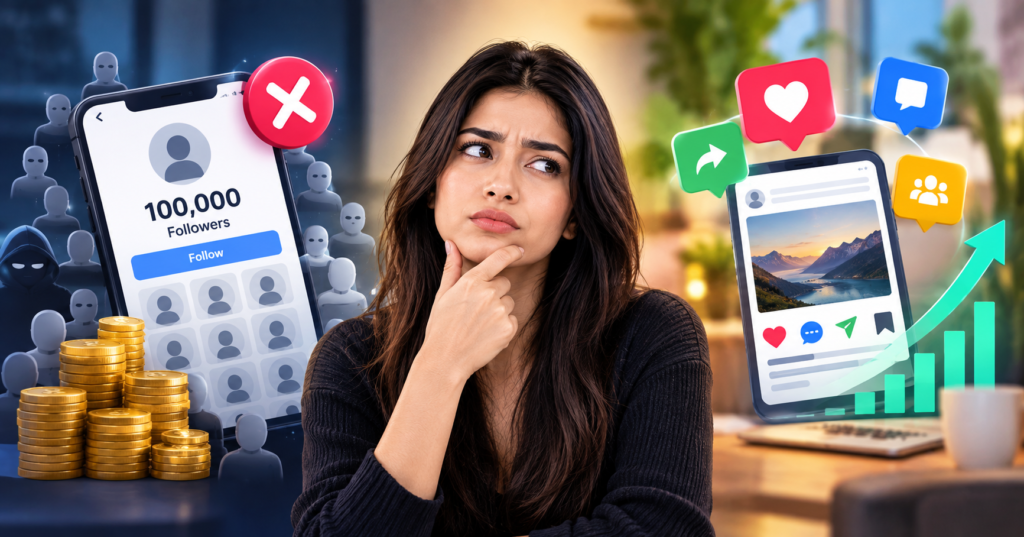
Follower count is the easiest number to see and the least useful number to buy. A creator’s audience size tells you nothing about whether those people trust the creator, live in your service area, or have any reason to want your product. Industry engagement data has consistently shown the same pattern for years: as follower counts climb, engagement rates fall. Nano creators in the 1,000 to 10,000 range routinely see engagement several times higher than accounts above 500,000.
That gap matters because engagement is a rough proxy for attention, and attention is what you are actually renting. A creator with 6,000 followers who gets 400 genuine comments has a community. A creator with 300,000 followers who gets 80 comments has a broadcast channel with a distracted audience. For a local bakery, a physiotherapy clinic, or a small e-commerce brand, the first account will almost always outperform the second at a fraction of the cost.
There is also a supply-and-demand effect working in your favour. Large creators are managed, agency-represented, and priced against brands with real media budgets. Micro and nano creators are often negotiating for themselves, are genuinely excited about a partnership, and will trade a lower rate for a longer relationship. That is where small businesses win.
Define Your Campaign Before You Search for Anyone
The most expensive mistake in influencer marketing happens before outreach begins. Brands start browsing creators, fall in love with someone’s aesthetic, and then reverse-engineer a campaign goal to justify the spend. Flip that order. Decide first whether you want awareness, email signups, foot traffic, or direct sales, because each goal points to a completely different kind of creator.
Write down three things on a single page: your objective, your total budget for the quarter, and the one action you want a viewer to take. If your objective is sales and your budget is $900, you are not running one $900 campaign — you are running six $150 partnerships and keeping the two that work. That reframing alone prevents most overspending, because it forces you to treat your first round of creators as paid research rather than a guaranteed win.
Finally, define your audience in plain language. “Women 25 to 40” is not a brief. “Working parents in Faridabad who order groceries online and care about packaging waste” is a brief. The tighter the description, the faster you will recognise the right creator when you see one, and the less likely you are to be impressed by irrelevant reach.
How to Find Influencers for Brand Campaigns Without Paying for Tools
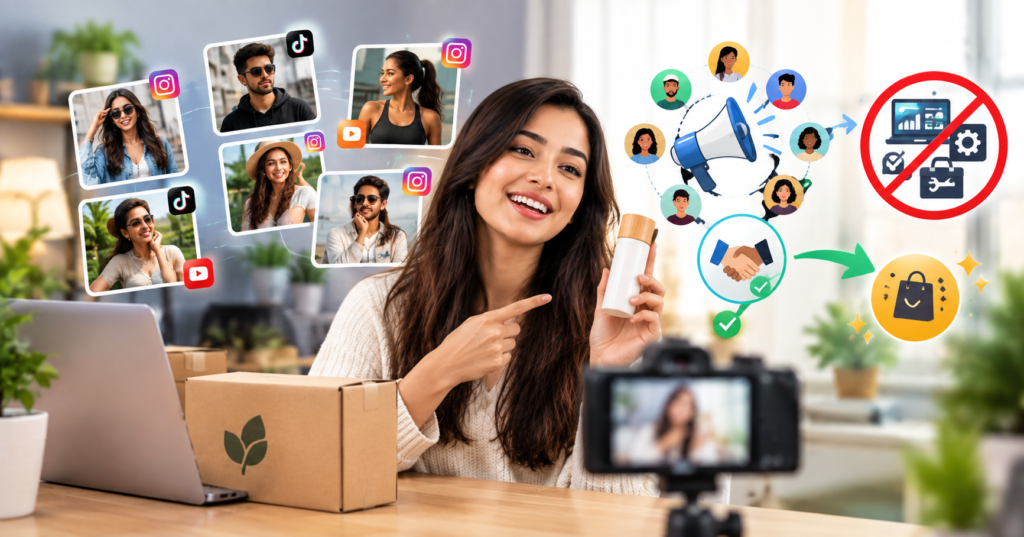
You do not need a subscription to start. The fastest free method is hashtag and location search inside the platform itself. Search three or four niche hashtags your customers actually use — not broad ones like #fitness, but specific ones like #homegymindia or #sourdoughbeginner — and sort by recent posts rather than top posts. Recent posts surface smaller creators who are actively publishing, which is exactly who you want.
Your second source is your own customer list. Scroll through your followers and tagged posts and look for anyone who already buys from you and has an engaged audience. These people convert best because the endorsement is genuine, and they are often thrilled to be asked. A skincare brand I worked with found its two highest-performing creators this way, both of whom had already posted about the product unpaid.
Third, use the algorithm as a research assistant. Once you open a relevant creator’s profile, platforms suggest similar accounts, and following those suggestions two or three levels deep builds a surprisingly complete map of a niche. Keep a simple spreadsheet with the handle, follower count, average likes, average comments, and a one-line note on fit. Fifty rows of that spreadsheet is worth more than any tool you could buy in your first year.
Paid discovery platforms do have a place, but they earn their cost only once you are running several campaigns a month and need filtering by audience demographics and fraud scoring. Until then, manual search plus disciplined note-taking gets you the same shortlist.
Vetting: The Ten-Minute Check That Saves Your Budget
Before you contact anyone, run a quick audit. Calculate engagement rate by adding likes and comments on the last nine posts, dividing by nine, then dividing by follower count. Compare that against the benchmarks below. Then read the comments themselves. Generic strings of emojis and phrases like “nice post” signal an engagement pod or purchased activity. Real questions, tagged friends, and inside jokes signal a real community.
Also check posting consistency and sponsorship density. A creator who posts twice a week for the past six months is reliable. A creator whose last five posts were all paid partnerships has trained their audience to scroll past ads, and your post will be ignored along with the rest.
| Creator tier | Follower range | Typical engagement rate | Realistic cost per post | Best for |
|---|---|---|---|---|
| Nano | 1K – 10K | 4% – 8% | $25 – $150 | Local businesses, product seeding, reviews |
| Micro | 10K – 50K | 2.5% – 5% | $100 – $500 | Direct response, niche products, UGC |
| Mid-tier | 50K – 250K | 1.5% – 3% | $500 – $2,500 | Category awareness, launches |
| Macro | 250K – 1M | 1% – 2% | $2,500 – $10,000+ | Broad reach, brand credibility |
Treat these figures as planning ranges rather than fixed rates. Pricing varies widely by platform, country, and niche — a finance or B2B creator commands more than a lifestyle creator with identical reach, because their audience is worth more per person. Use the table to spot outliers: if someone with 12,000 followers quotes $1,800, they either have exceptional data to justify it or they are testing you.
Red Flags Worth Walking Away From
A few signals reliably predict a disappointing campaign:
- Follower growth in sudden vertical spikes rather than a steady climb
- Comment sections dominated by accounts with no posts or profile photos
- Refusal to share screenshots of reach, saves, and audience location
- Rates quoted without any performance data attached
Negotiating Terms That Keep Costs Down
Your first message should be short, specific, and human. Name something they actually posted, explain in one sentence why their audience fits, and state the budget range openly. Hiding your budget wastes everyone’s time and usually results in an inflated first quote. Openness signals you are experienced, which changes the tone of the whole negotiation.
From there, use non-cash levers. Affiliate commission on top of a lower flat fee aligns incentives and often costs less overall. Product gifting works well for nano creators and for anything with a high perceived value and low unit cost. Multi-post packages — three posts over six weeks instead of one — typically come in 20 to 30 percent below the per-post rate and perform better, because repetition drives purchase decisions far more than a single impression.
One term to always negotiate: usage rights. Ask for permission to reuse the content in your paid ads for six to twelve months. Creator-made content frequently outperforms studio ads, and securing those rights upfront turns a single fee into a reusable asset. Put everything in a one-page written agreement covering deliverables, dates, disclosure requirements, revisions, and payment terms. Proper ad disclosure is not optional — advertising regulators in most markets require clear labelling, and the penalty falls on the brand as well as the creator.
Measuring Results So Your Next Round Costs Less
Give every creator a unique discount code or tracked link. This is the single highest-return habit in influencer marketing, because it converts opinion into evidence. Track cost per acquisition, not just impressions, and compare it against what you pay for the same customer through paid ads. If a $200 partnership brings twelve sales, you have a repeatable channel.
Also capture the soft signals: saves, shares, direct messages, and the quality of comments. A post with modest sales but hundreds of saves often produces delayed purchases over the following weeks. Review results after each round, drop the bottom half, and reinvest in the creators who performed. Within three or four cycles you will have a small roster you trust, and your cost per result will fall steadily — which is the real answer to how to find influencers for brand growth without overpaying.
Conclusion
Overpaying happens when brands buy reach instead of relevance. Define your objective first, search manually in your own niche, vet engagement quality before you talk price, benchmark rates against realistic tiers, and negotiate with affiliate deals, bundles, and usage rights rather than a single large flat fee. Then measure everything with unique codes so each round is cheaper and sharper than the last.
Start this week: build a spreadsheet of twenty nano and micro creators in your niche, contact five, and run one small test. You will learn more from that $300 than from any amount of further reading — and you will have the beginnings of a creator roster that grows with your business.
Frequently Asked Questions
How many followers should an influencer have for a small business?
For most small businesses, the sweet spot is between 5,000 and 50,000 followers. Creators in this range usually maintain genuine relationships with their audience, respond to comments, and charge rates that allow you to test several partnerships instead of gambling everything on one. Only consider larger creators once you have proven the channel works and need to scale reach rather than validate it.
What should I pay an influencer for one post?
A common starting benchmark is roughly $100 per 10,000 followers, adjusted up or down for engagement rate, platform, niche, and content format. Video content and exclusivity clauses push rates higher, while product gifting and multi-post bundles bring effective costs down. Always ask for recent reach and saves data before agreeing to a price, since engagement quality justifies a premium far more than follower count does.
Do I need an influencer marketing platform to get started?
No. Manual discovery through niche hashtags, your existing customer base, and platform recommendations is enough to build your first shortlist, and it costs nothing but time. Paid tools become worthwhile when you are managing more than a handful of campaigns each month and need audience demographic filtering, fraud detection, and reporting at scale.
How do I know if an influencer has fake followers?
Look for sharp, unexplained spikes in follower growth, an engagement rate far below the norm for their tier, and comment sections filled with empty accounts posting generic praise. Asking directly for screenshots of their audience location and age breakdown is the fastest test — genuine creators share this readily, while those with inflated numbers tend to delay or decline.
How long before influencer marketing shows results?
Direct-response results from discount codes usually appear within 24 to 72 hours of a post going live, but the fuller picture takes longer. Saves and shares often drive purchases weeks later, and brand awareness compounds across repeated exposures. Plan a minimum three-month window with several creators before deciding whether the channel works for your business.